
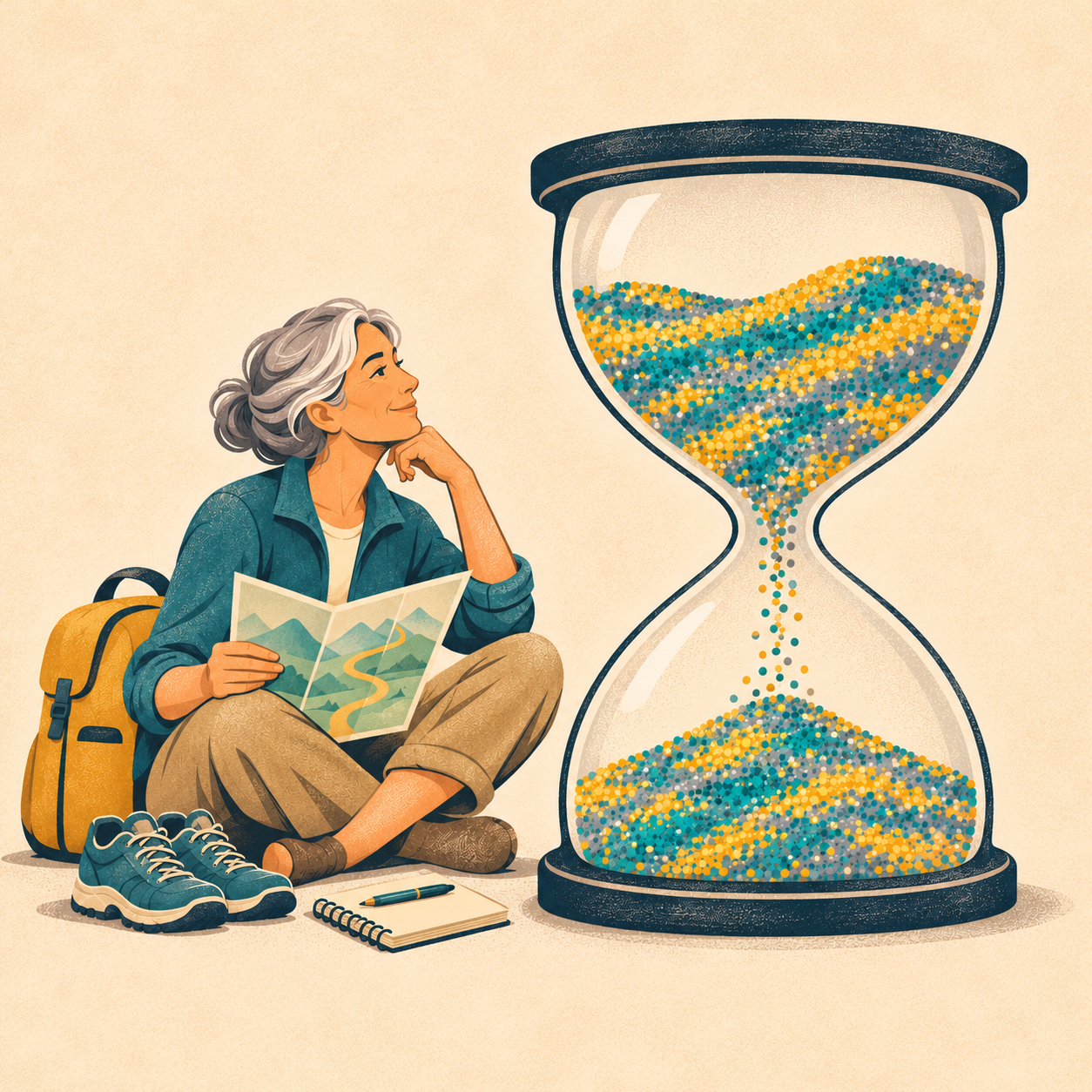
Are you there yet?
Today we will look at another important number to remember when planning the rest of your life. We previously discussed using statistics as a kind of time machine, not to predict your personal future precisely, but to see what is statistically likely.
Life expectancy tells us how long people live. Healthy life expectancy, or HALE, estimates how many of those years are lived in full health.
HALE is very good marker to an average age at which a person first develops a serious illness
According to the latest WHO estimates for 2023:
- United States: HALE was approximately 64.6 years, while total life expectancy was close to 79 years.
- Worldwide: HALE was approximately 62.8 years.
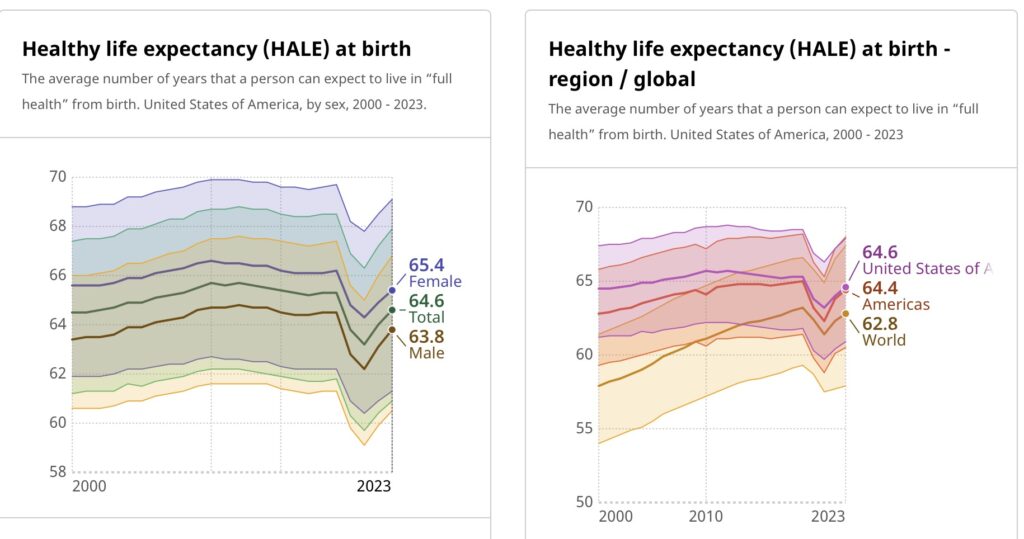
For personal planning, HALE is a very useful warning: the number of years available for unrestricted travel, demanding projects, and physically active enjoyment may be considerably smaller than total life expectancy suggests.
Interesting observation
A model-based study using the HRS (Health and Retirement Study) also found that among Americans healthy at age 50, the mean age at the first onset of ADL disability was 66.9, but only about 76% were ever expected to experience it; others died without entering that state. Education alone shifted the mean from 60.3 years for those without a high school diploma to 72.6 years for college graduates.
References
- Health and Retirement Study
- Disparities by Sex, Race/Ethnicity, and Education in Trends in the Disability Burden in the United States, 1996–2018
- WHO, Healthy Life Expectancy methodology and definition
- WHO, United States HALE estimates, 2000–2023
- WHO, Global Health Estimates released October 2, 2026
- Systematic review, healthspan definitions vary substantially
- The Society Time Machine